


 June 30, 2026
The dermocosmetics industry is undergoing a paradigm shift toward a predictive, data-driven ecosystem where objective quantification supersedes generic claims. This evolution centers on the systematic integration of cutaneous biomarkers, molecular, proteomic, and lipidomic, measured via non-invasive modalities. While historical assessments are relied on in vitro models, modern breakthroughs utilize adhesive tape-stripping, swabbing, and microfluidic extraction of dermal interstitial fluid (dISF). Synergized with high-throughput “omics” platforms and AI, these techniques enable precise detection of functional markers and microbiota profiles. This convergence facilitates hyper-personalized skincare, bridging laboratory precision with real-world applications to position skin as a vital diagnostic interface for holistic health. This article examines the perspectives and the potential of the ingredients and cosmetics products testing based on skin biomarker-driven analysis.
 June 30, 2026
Skinobs, the leading global reference platform for preclinical and clinical research in the cosmetics industry, celebrates the 10th anniversary of the launch of its flagship service this year. The company has created a unique ecosystem that now connects over 9,000 experts from 124 countries, over 500 research laboratories, and over 800 cosmetic evaluation methods and technologies.
 March 31, 2026
Microbiome claim substantiation is increasingly critical, driving demand for mechanistic analyses of product-host-microbe interactions. Leveraging metagenomics, over 80 global CROs are exploring the cutaneous flora’s genomic landscape. Despite its complexity, deciphering this “living layer” is essential to understanding its functional integration with skin metabolism and homeostatic regulation.
 February 28, 2026
Exfoliation (skin exfoliation) has evolved from ancient cultural rituals into a sophisticated field of cosmetology, combining regional aesthetic canons with rigorous scientific objectivity. Approaches to skincare vary by region: the Korean cosmetics trend known as "glass skin" focuses on gentle microexfoliation and protecting the skin's microbiome, while the American market favors products with high concentrations of active ingredients and powerful effects. European regulations are favoring a shift toward natural alternatives to mechanical exfoliation, while in India and Brazil, skincare continues to be based on a holistic, plant-based approach to skin cleansing.
 November 26, 2025
In the hair hygiene and care segment, a trend known as "skinification" is becoming increasingly evident. According to this concept, hair and scalp are treated with the same care and attention as facial and body skin, and care products are formulated using high-quality ingredients previously reserved for skincare.
 October 31, 2025
This article’s purpose is to give an overview of the drivers that will influence the innovation in the field of the evaluation whatever it is ingredients, cosmetics, nutraceuticals or medical devices. The consumer requests for science-based products will certainly impact the testing approaches of the skin, scalp and hair analysis. Globally, the IFSCC Congress 2025 underscored a transformative era in cosmetic testing, marked by technological sophistication, inclusivity, and translational relevance. This evolution is driven by the synergistic integration of in-vitro, ex-vivo, and in-vivo models with AI-driven analytics and organ-on-chip systems, collectively enhancing the robustness, reproducibility, and consumer relevance of testing methodologies. For scientists and industry stakeholders, these advancements herald a future where cosmetic evaluation transcends conventional safety and efficacy assessments, embracing predictive precision while aligning with ethical and environmental imperatives.
 June 30, 2025
The beauty industry is undergoing a profound transformation, propelled by scientific advancements and evolving consumer expectations. The convergence of clean beauty, longevity-focused skincare, menopausal care, medical aesthetics, personalized treatments, and microbiome research underscores a shift towards evidence-based, high-performance formulations. As cosmetic science continues to integrate cutting-edge technologies and sustainable practices, the industry is poised to offer more effective, safer, and ethically responsible products, aligning with the future of cosmetics innovation.
 June 30, 2025
Assessing the efficacy of sun protection products is a complex task, given the different approaches used, whether they be in silico, in vitro, in vivo or hybrid products. The main criteria affecting performance include composition, photostability, absorption and distribution of inorganic and organic filters, organoleptic and galenic characteristics (such as spray, powder compact, oil, cream, etc.). In addition, other factors such as wrinkles, body zone, perspiration, hair, application method and quantity used also influence the efficacy of sunscreen products.
 March 6, 2025
Sebum and the oily substances produced by the sebaceous glands play a crucial role in maintaining the skin's physiologically healthy condition. Sebum often evokes negative associations due to its association with acne and excessive oiliness. However, it's important to remember that sebum is a crucial component of the skin's natural defense system. A thorough understanding of the functions of sebum, the mechanisms of its production, and its interaction with different skin types is crucial for both cosmetology scientists and cosmetic product evaluation specialists.
 March 4, 2025
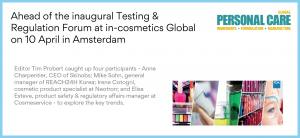
Editor Tim Probert caught up four participants - Anne Charpentier, CEO of Skinobs; Mike Sohn, general manager of REACH24H Korea; Irene Cotogni, cosmetic product specialist at Neotron; and Elisa Esteve, product safety & regulatory affairs manager at Cosmeservice - to explore the key trends.
 March 6, 2024
The cosmetics industry is shifting away from anti-ageing claims towards a more positive approach to ageing. Consumers now seek a “pro-ageing” philosophy that prioritizes looking healthy over looking younger. Brands are embracing a new vocabulary centered on renewal, regeneration, and glow to align with this shift. Beauty is evolving to encompass overall well-being, lifestyle, and quality of life, emphasizing tonicity, elegance, and silhouette preservation. The focus is on supporting the ageing process rather than fighting signs of ageing, providing emotional pleasure and sensorial experiences through skincare as “pro-longevity” life enhancers. The holistic point of view of the skin ageing is under way.
 February 19, 2024
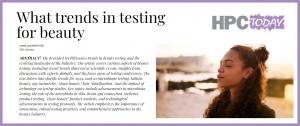
The provided text discusses trends in beauty testing and the evolving landscape of the industry. The article covers various aspects of beauty testing, including recent trends observed at scientific events, insights from discussions with experts globally, and the focus areas of testing conferences. The text delves into specific trends for 2024, such as microbiome testing, holistic beauty, age inclusivity, "clean beauty," hair "skinification," and the impact of technology on testing studies. Key topics include advancements in microbiota testing, the role of the microbiota in skin-brain-gut connection, inclusive product testing, "clean beauty" product analysis, and technological advancements in testing protocols. The article emphasizes the importance of innovation, ethical testing practices, and comprehensive approaches in the beauty industry.
 November 6, 2023
The cellulite, particularly visible on the thighs and buttocks, is believed to result when subcutaneous adipose tissue protrudes into the lower reticular dermis, thereby significantly modifying the dermo-epidermis junction and creating irregularities at the surface. The biomechanical properties of epidermal and dermal tissue may also influence severity. This phenomenon located principally in the tights, abdomen and buttocks is characterised giving a spongy aspect of the skin. It can be associated with water retention and fibrose. The changes of the skin by the adipose tissue induce the changes of the biomechanical properties of the dermis.
 October 11, 2023
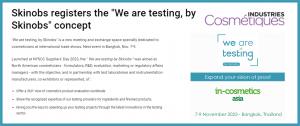
"We are testing, by Skinobs" is a new meeting and exchange space specially dedicated to cosmeticians at international trade shows. Next event in Bangkok, Nov. 7-9.
 October 2, 2023
Sun care clinical testing has always been complex, but innovations in the category and trends in recent years - such as the clean beauty movement and sustainability awareness - have made it even more complicated. We spoke to Anne Charpentier, CEO of French preclinical and clinical testing database company Skinobs, about the current challenges and the future of sun care testing.
 July 27, 2023
The global overview highlights the current drivers of the specific market of clinical evaluation for ingredients and personal care brands. CROs offer a wide range of services. Tests and methods as well as more information about the market and its difficulties is shown in this second part.
 May 1, 2023
The global overview highlights the current drivers of the specific market of clinical evaluation for ingredients and personal care brands. In this first part of two, the focus is on Europe and the preconditions for clincial testing. This market concerns skin, hair, scalp, and nail studies, for efficacy,safety and tolerance, consumer tests and sensory analysis.
 April 14, 2023
Hair is an integral part of one’s identity, and people around the world place a great deal of importance on its look and style. Consumers are now looking for more inclusive, natural, ethical, and sustainable products that can help them improve their hair grooming rituals while still providing the necessary cleansing and caring benefits.
 April 2, 2023
After the first validations of the product toxicology, preservation (challenge test), stability comes the necessity to ensure the consumers safety. To evaluate the safety of cosmetics the first actor will be the toxicologist who will quantitatively and qualitatively review the product formula. In a second step, testing laboratories will process to the safety assessment via in silico analysis, on chemicals, cells or on skin models. Once the product innocuity is fully validated, tolerance studies can start on human beings. In this article we will present the several ways, the most used to evaluate the safety and the tolerance of cosmetics to make them safe for the consumers, wherever there are used in the world.
 March 26, 2023
Eco-responsibility is one of the major expectations of today’s consumers. Even though geopolitical conditions and their current inherent crises have a general impact on global consumption and economies, attention to respect for the environment has never been more important. The observation is known and although warnings about climate changes began to resonate in the 70s, manufacturers in the cosmetics value chain have relatively recently begun to integrate this new vision into the development of their activities.
 March 14, 2023
The skin plays multiple roles in protection, perception, immunity, regulation and as a blood and lymph reservoir for the whole body. Thanks to a number of mechanical, chemical and biological mechanisms (sebum, biofilm, etc.), the skin maintains its integrity in response to the various endogenous and exogenous environmental variations to which it is subjected. Today, the increase in sensitive skin is a major challenge in the development of dermocosmetic products and active ingredients.
 February 13, 2023
Just as ChatGPT answers the question of container-content interaction in cosmetics, we could talk about the interaction of the cosmetic product and its packaging with the consumer. This would lead us into considerations related to the consumer's experience with the cosmetic product's packaging. We would have to consider how the container, its shape, size or ease of use would influence the consumer experience. But far from the territories of marketing and consumer feelings, what interests us here is the way in which cosmetic brands can analyze the interaction phenomena of the formula with its container, whether it is a bottle, tube, spray, bottle or tube.
 January 23, 2023
Le stress induit par la pollution peut augmenter la formation de produits glyqués dans les différentes couches de la peau. Il produit les produits finaux de glycation avancée (AGE). Ces AGE affectent la qualité de la matrice extracellulaire en détruisant le collagène. Le stress chronique induit par les polluants externes altère l'intégrité de la barrière cutanée et génère divers troubles cutanés : sensibilité, pigmentation, dermatite, etc.
 January 9, 2023
L'un des effets de la pollution atmosphérique sur la peau - combinée à l'ozone, aux rayons UV et à la lumière bleue - est la génération de radicaux libres et de réactions inflammatoires consécutives à long terme. Le stress oxydatif provoque généralement une diminution de la protection antioxydante naturelle et réduit finalement les performances de la barrière cutanée, entraînant des dommages cutanés tels que le vieillissement, les taches et la sensibilité, en raison de multiples troubles dans la couche cornée, l'épiderme et le derme (dommages à l'ADN, carbonylation des protéines, altération enzymatique, médiateurs de l'inflammation, oxydation, etc.)
 September 19, 2022
During the first half of 2022, Skinobs conducted an international study on the clinical testing market for the beauty industry and is publishing a summary of this study. The study concerns the development of skin, hair, scalp and nail care products. It deals with efficacy, safety and tolerance measurements, consumer testing and sensory analysis. The summary of the study is available online.
 June 29, 2022
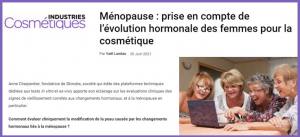
Anne Charpentier, founder of Skinobs, a company that publishes technical platforms dedicated to in vitro and ex-vivo tests, sheds light on the clinical evaluation of signs of aging correlated to hormonal changes, and to menopause in particular.
 June 14, 2022
Skinobs invites cosmeticians to attend the free webinar dedicated to the presentation of the survey carried out on the global market for clinical testing in cosmetics: on Thursday, June 16., 2022 from 3:00 p.m. to 3:30 p.m. (Paris time).
 June 13, 2022
Anne Charpentier of Skinobs explores the evolution of active ingredient testing in the personal care sector, and takes a close look at current trends For many years now, every cosmetic product launched on markets around the world has been validated for its safety and efficacy in accordance with the cosmetic regulations of each country. Product performance is changing along with consumer expectations, shopping habits, beauty routines and lifestyles.
 May 29, 2022
Why do cosmetic products for sensitive skin need to be tested in vivo? What regulatory requirements must be met? How to recruit volunteers? What types of tests should be performed? During the Cosmetotest symposium, organized on May 24 and 25 by Skinobs and Cosmet'in Lyon, Anne Sirvent, from Eurofins Cosmetics & Personal Care, gave a complete overview of the issue.
 May 6, 2022
Skinobs , the platform for researching laboratories, tests and methods to support the claims or cosmetic products, has extracted the main trends in cosmetic claims from its database searches. the main trends in cosmetic claims.
 April 30, 2022
On Thursday, May 12, 2022, at 3:00 p.m. PT, Skinobs invites cosmeticians to attend a free Focus-Live webinar dedicated to skin hydration assessment.
 April 19, 2022
Claims of personal care evolve following trends and various innovations in the field of the active ingredient development, the finished product formulation and the way both are evaluated, demonstrating their performance. Since the mid-2010s, the cosmetics industry has been gradually leaving the era of anti-ageing behind. Today, most consumers are more in the mood for a “well ageing”, “slow ageing” or “pro-ageing” approach.
 March 10, 2022
Skinobs invites skincare creators and ingredient manufacturers to the Boost your test booth (#Q108), organized in collaboration with in-cosmetics Global and with the support of PHD Trials, QACS and Monasterium, in the heart of the Testing & Lab area. The objective is to guide all visitors to the show in their evaluation process and to advise them regardless of the type of preclinical test in vitro or ex-vivo (stability, safety, container-content), or clinical (tolerance, efficacy, sensory analysis or consumer tests ...), and whatever the classic or innovative claims to be evaluated.
 March 10, 2022
The sun protection objectivation subject represents a complex issue between in silico, in vitro, in vivo and hybrid methods at least as important as the challenge of the formulation itself. Anne Charpentier explains different methods with their advantages and disadvantages. First, it is interesting to consider what criteria mainly influence the performance of UV protection products: composition, repartition, photostability, absorbance and distribution of the inorganic and organic filters, galenic (spray, compact powder, oil, cream…), properties to form a stable, homogeneous, and resistant film, pleasant to apply.
 February 21, 2022
Skinobs will meet skincare creators and ingredient manufacturers at the Boost your test booth (#Q108), organized in collaboration with in-cosmetics Global and with the support of PHD Trials, QACS and Monasterium, in the heart of the Testing & Lab area.
 January 31, 2022
Traditional methods of consumer tests have been applied to the testing of personal care products since many years. Difference and descriptive tests on odours, perfumes, textures, cosmetics tolerance, or efficacy generate subjective information that is very useful to the formulators, R&D managers, marketing, and regulatory affairs team. Untrained panels with experienced uses of personal care are known to be capable of detecting differences of various skin, hair, or nail products attributes under controlled laboratory conditions or in a home use situation after a single use or a treatment.
 January 13, 2022
The Cosmetotest symposium, dedicated to preclinical and clinical tests in the dermocosmetics industry, will be held on May 24-25, 2022, at ENS-Lyon. It is organized by SKINOBS and Cosmet-in Lyon in partnership with the SFI2C and the DIIP, and the support of the AURA-Region and CosmeBooste Project. It is intended for cosmeticians from France and elsewhere. Anne Charpentier, founder of SKINOBS, explains the genesis of this symposium and highlights the news of this still little-known, yet dynamic and agile sector of activity, which is a key marker of the cosmetics industry.
 January 12, 2022
The Cosmetotest symposium, dedicated to preclinical and clinical testing in the dermocosmetic industry, will be held on May 24 and 25, 2022, at ENS-Lyon. Organized by Cosmet'iIn Lyon and SKINOBS, in partnership with SFI2C and DIIP and with the support of the AURA region and the CosmeBooste project, it is aimed at cosmeticians from France and around the world. Anne Charpentier, founder of SKINOBS, explains the genesis of this event and sheds light on the current state of this sector of activity sector of activity, which is still unknown, yet dynamic and agile. A key marker of the cosmetics industry.
 December 6, 2021
The study of emotions has won over cosmetics for a few years now with first the evaluation of well-being by quality-of-life questionnaires and self-evaluations of consumer tests. Since the 2010s, with the contribution of neuroscience and new technologies, it has been a question of scientifically and dynamically evaluating the psychic and physiological influence of emotions associated with the application of a cosmetic product and consequently the actions that result from it. Emotions, complex physical and instinctive phenomena, cause unconscious bodily signals that can be instantly and objectively measured.
 November 9, 2021
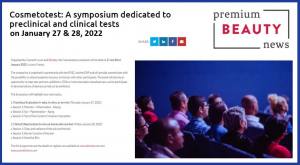
Organised by Cosmet’In Lyon and Skinobs, the Cosmetotest symposium will be held on 27 and 28 of January 2022, in Lyon, France. The symposium will provide cosmeticians with the possibility to attend academic lectures, to interact with other participants. The event will also be an opportunity to meet test partners, exhibitors, CROs or instrumentation manufacturers, and to participate in demonstrations of devices carried out by exhibitors
 November 4, 2021
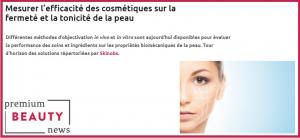
In-vivo objectification of the firmness and tonicity of the skin. Personal care products offering an efficacy on the skin biomechanical properties are often linked to anti-aging claim category. These products are associated to various functionalities such as, lifting, firming, remodeling, plumping, resculpting, restructuring or tonic. The firmness and the tonicity are skin attribute that are constantly impacted by the exposome (concept developed by Dr. Jean Krutman in 2016) and all the non-genetic factors that influence skin ageing.
 October 31, 2021
Various in vivo and in vitro objectivation methods are available today to evaluate the performance of skin care products and ingredients on the biomechanical properties of the skin. Overview of the solutions listed by Skinobs.
 October 20, 2021
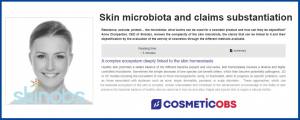
Rebalance, activate, protect… the microbiota: what claims can be used for a cosmetic product and how can they be objectified? Anne Charpentier, CEO of Skinobs, reviews the complexity of the skin microbiota, the claims that can be linked to it and their objectification by the evaluation of the activity of cosmetics through the different methods available.
 October 20, 2021
Rebalance, activate, protect... the microbiota: what claims can be used for a cosmetic product and how can they be objectified? cosmetic product and how to objectify them? Anne Charpentier, CEO of Skinobs, reviews the complexity of the microbiota, the claims that can be linked to it and their objectification through the evaluation of the activity of cosmetics through the different methods available.
 October 12, 2021
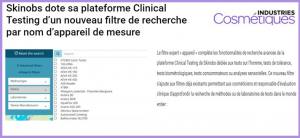
The "device" expert filter completes the advanced search functionalities of Skinobs' Clinical Testing platform dedicated to human testing, tolerance testing, biometrological testing, consumer testing or sensory analysis. This new filter is in addition to the existing filters that allow cosmeticians and clinical evaluators to search for test methods or laboratories worldwide.
 September 8, 2021
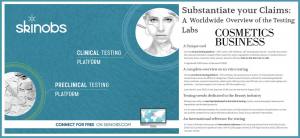
In 5 years, Skinobs has become the reference platforms for the sourcing of preclinical and clinical tests in cosmetics: a glance at the key claims. Since February 2016, Skinobs facilitates the activity of cosmeticians by allowing them to identify and contact the most qualified laboratories, quickly and free of charge, to carry out their preclinical and clinical tests, thanks to 2 friendly platforms, with menu and filters.
 June 30, 2021
The sourcing platform for clinical and preclinical tests - the second part having been launched in June 2020 - which also offers a news feed, is celebrating its fifth anniversary.
 June 6, 2021
In the last few months there has been a strong desire for cosmetic products that should not only care for the skin, but also increase well-being. Anne Charpentier explains how the demands have changed in 2020 and how their effects on well-being can be measured.
 June 1, 2021
Skin imperfections classically cover a wide range of visible alterations of the skin, caused by a variety of causes. And today, the wearing of the mask, which sometimes takes several hours a day, is becoming a new parameter to be taken into account in their evaluation. Classifying the claims related to skin imperfections in this context is therefore anything but simple! Anne Charpentier, Founder and CEO of Skinobs, explains.
 May 31, 2021
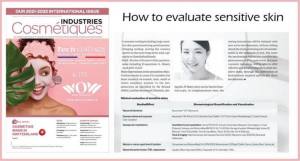
The skin plays multiple roles of protection, perception, immunity, regulation or blood and lymphatic reservoir for the whole body. Thanks to several mechanical, chemical or biological (sebum, biofilm …) reactions, the skin ensures its integrity according to the various endogenous or exogenous environmental variations. Today, the increase in the fragile phenomena of skin is a major issue in the development of the dermocosmetics.
 May 17, 2021
Skinobs' platforms help cosmeticians, R&D managers, formulators, marketers or regulatory affairs managers to find, worldwide, recognized testing providers and relevant methods to support the claims of actives or finished products.
 May 6, 2021
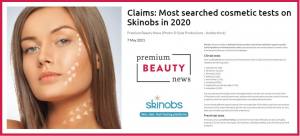
Skinobs, the search platform dedicated to tests providers and relevant methods to support cosmetic active ingredients or finished products claims, has extracted the main trends related to cosmetic claims from the queries that are carried out on its databases.
 March 31, 2021
 February 28, 2021
 February 5, 2021
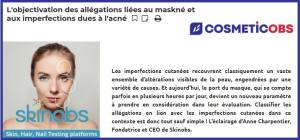
Skin imperfections classically cover a wide range of visible alterations of the skin, caused by a variety of causes. And today, the wearing of a mask, which sometimes takes several hours a day, is becoming a new parameter to be taken into consideration in their evaluation. Classifying the claims related to skin imperfections in this context is therefore anything but simple! Anne Charpentier, Founder and CEO of Skinobs, explains.
 June 29, 2020
Password: 26juin20
 June 25, 2020
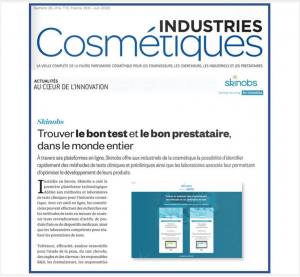
Claims of personal care evolve following trends and various innovations in the field of active ingredient development, the finished product formulation and the way both are evaluated, demonstrating their performance.
 April 28, 2020
The implementation of the efficacy studies refers to the regulation of each world zone and sometimes each country. In Europe, the references are the European Regulation for cosmetics claims (EC No.655/2013 - Art.20-Art.22) as well as Regulations No.1223/2009 and its provisions on the Product Information File (PIF). Focus on the benefits of clinical scores, with Anne Charpentier, from Skinobs.






 Follow us on Linkedin!


